
We no longer use this webpage. Please use the following link for our new updated webpage:
IMER Webinar 24.09: Explaining Variation in Refugee Recognition Rates: the Role of Institutional Architectures
Two asylum seekers fleeing persecution from the same country may end up in a very different situation if refuge is sought in country A or in country B. Expected discrepancies may have dire consequences for both asylum seekers and the ability of the international protection apparatus to protect them.
In this webinar, Pierre-Georges Van Wolleghem, postdoctoral researcher at the Department of Comparative Politics, UiB, will discuss the reasons why refugee recognition rates vary from country to country. Drawing on quantitative data, he posits that variation in recognition rates stems from the procedural diversity of Refugee Status Determination (RSD) structures, i.e. the legal and administrative machinery that transform asylum claims into positive or negative outcomes.
Pierre-Georges Van Wolleghem is a postdoctoral fellow at the Department of Comparative Politics, UiB, and executive scientific coordinator of PROTECT (Horizon 2020). Van Wolleghem works on European Union migration policies. His research interests include social policies, quantitative methods, and impact evaluation.
Time: Thursday 24th of September 2020, 12.30 – 13.30
Meeting ID: 619 6209 0787
Password: 6UykduQ%
IMER Webinar 11.06: Migrant Parents’ Experience with Leisure and Outdoor Play in Norway
In Norway, there is an institutionalized emphasis on the importance of outdoor life and play. This is embedded in public provision for children and in dominant understandings of how families should use leisure time and how children should play. In this seminar, Raquel Herrero-Arias, PhD candidate at the department of Health Promotion, UiB, will discuss her co-authored article (currently under review) on the experiences of Southern European migrant parents with professional advice on family leisure and outdoor play. It focuses on how migrant parents respond to associate discourses of risks in their encounters with kindergarten professionals and community health nurses. Raquel will discuss how migrant parents navigated risk discourse in these encounters in many ways either by contesting, accepting professional intervention, or falsifying compliance.
 Raquel Herrero-Arias is a PhD candidate at the department of Health Promotion, UiB. She holds a Master’s Degree in Gender Studies, and an Erasmus Mundus Master in Social Work with Families and Children. Her doctoral project explores the experiences of parenting among Southern European migrant parents in Norway.
Time: Thursday 11th of June 2020, 11.00 – 12.00
Meeting ID: 641 6856 7153
Password: IMER11.06
Call News for PhD Position at IMER
There is a vacancy for a 4/year PhD position at the Faculty of Social Sciences, UiB. The position is connected to the interdisciplinary research unit International Migration and Ethnic Relations (IMER) and is open for applicants with a background from different disciplines within social sciences.
Migration is a prioritized area of research at the University of Bergen and is organised as one of the pillars of the strategic initiative on research into global challenges. At the Faculty of Social Sciences, migration research takes place at all departments and centres, and the research unit on International Migration and Ethnic Relations (IMER) has served as the core cross-disciplinary platform for studies and research on this topic for over two decades. The aim of IMER Bergen is to contribute to research-based knowledge about international migration, including on the interplay between politics and mobilities, and migration and inequalities.
The applicant is invited to write a research proposal on a topic relevant to the research at IMER. The successful applicant is given 3 full years to focus on the completion of a Ph.D. dissertation based on this proposal. In addition, the position includes 1 year of funded duty work to organize activities at IMER.
Deadline for application: August 9, 2020
For information, please click here
IMER Webinar 29.05: The Promise of Babette’s Feast: Facilitated Encounters between Locals and Refugees in Norway
There is a deep-rooted cultural belief that encounters between strangers in local settings can bring about social change. Mette Strømsø, a researcher at the Sociology Department UiB, brings this aspect to the forefront in her study of local community initiatives established in the wake of the refugee influx in 2015. Mette will present her co-authored article with Susanne Bygnes whereby they strive to unpack the promise, inherent contradictions and transformative potential of the facilitated encounters in local communities where newcomers settled. The reference to Karen Blixen’s short story Babette’s feast indicate the cultural resonance of the promise in the facilitated encounters between newcomers and permanent residents.
 Mette Strømsø is a researcher for IMEX at the department of Sociology, UiB. She holds a PhD in Human Geography. Her research interests fall at the intersection of political geography and social and cultural geography, with a focus on everyday nationhood and especially the reconciliation between nation and diversity.
Time: Friday 29th of May 2020, 11.00 – 12.00
Join us on Zoom
IMER Webinar 28.04: Corona Prevention and Impacts on Syrian Refugees in Jordan
Jordan has enacted some of the world’s strongest lockdown and quarantine measures. These measures have been received quite well domestically, but their impact on the country’s most vulnerable refugees is only beginning to be understood.
The majority of Syrian refugees in Jordan live in urban areas in addition to a significant number also residing in camps. As living conditions are linked to the effectiveness of prevention measures, different populations may experience different outcomes.
In this webinar, Sarah Tobin will explore the situation of the Syrian refugees in Jordan, while also examining the political consequences of the pandemic response in the country.
 Sarah Tobin is a senior researcher at Chr. Michelsen Institute. Her latest research projects examine questions of religious and economic life and identity construction with Syrian refugees in Jordanian camps of Za’atari, Azraq, and Cyber City.
Time: Tuesday 28th of April 2020, 11.00 – 12.00
Join us on Zoom
IMER Lunch Seminar 25.02: Aspirations among Women seeking Asylum in Norway: A Longitudinal Perspective from the Asylum Centre and Onwards
Since the refugee reception crisis in 2015, asylum seekers and refugees have often been at the centre of public and scholarly debate. However, the focus has frequently been on the problems they bring about for host countries. Less attention has been placed on asylum seekers’ aspirations, dreams and plans after arrival. Yet these are meaningful to study given that aspirations can have a significant impact on people’s future trajectories and hence, the ways they incorporate into their new homes. Furthermore, desire, despite having a strong agentic nature, is deeply entangled in the social structures and discourses that newcomers are surrounded by.
In this seminar, Zubia Willmann, will be presenting her article in which she explores how the aspirations of women who came to Norway as asylum seekers change over time, the elements that may be involved in such changes as well as how these women go about pursuing their aspirations. She draws on intermittent fieldwork for one and a half years (2017-2019) in which she followed women seeking asylum in Norway, from the stages in which they lived in asylum centres to the early stages of settlement in a Norwegian municipality.
A light lunch will be served! All welcome.
 Zubia Willmann is a currently a PhD candidate at VID Specialized University, Stavanger with a project exploring how women seeking asylum in Norway go about starting their life in their new home. She has an interdisciplinary background, her main fields of interest being migration studies but also gender and religion studies among others. She has been recently a visiting scholar at the Migration and Diversity Centre at the Vrije Universiteit in Amsterdam. Zubia is also a member of the IMER Junior Scholars Network.
Time: Tuesday 25th of February 2020, 12.30 – 13.30
Place: Rosenbergsgaten 39, Seminar room 112, first floor
IMER Lunch Seminar 13.01: Gender, Migration and Climate Change Adaptation in Bangladesh
Human movement has been predicted to be one of the major consequences of climate change. This prediction has led to a renewed interest in the relationship between human movement and the environment. The expected negative consequences of climate change have also led to new development initiatives aimed to reduce the impact of these hazards through so-called adaptation initiatives. These initiatives have become to be increasingly implemented in Bangladesh which is considered one of the world’s most vulnerable countries to climate change.
How does aid initiatives meant to help people adapt to the consequences of climate change influence migration patterns. Do such initiatives have different effects on men’s and women’s perceptions of what adaptation strategies are available to them? How is gender mainstreaming understood among aid actors in Bangladesh and how are women migrants perceived in the country? Some of these questions will be touched upon in Kathinka’s presentation.
A light lunch will be served! All welcome.
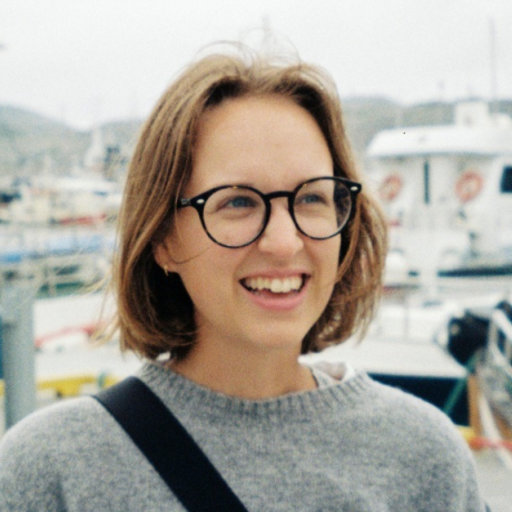 Kathinka Fossum Evertsen is a PhD Fellow in Sociology at Nord University, Faculty of Social Sciences. She was recently a visiting student researcher at Centre of Gender and Disasters at UCL, after which she co-founded the Nordic hub of the Gender and Disaster Network. She is currently a visiting researcher at International Centre for Climate Change and Development (ICCCAD) in Dhaka, Bangladesh.
Time: Monday 13th of January 2020, 12.30 – 13.30
Place: Rosenbergsgaten 39, Seminar room, first floor
IMER Lunch Seminar 03.12: 50 Years of Immigration Debate in the Scandinavian Press
How has the Scandinavian press covered immigration over the years? What themes, framings and agents have been emphasized in the media coverage of immigration in the last 50 years, and how this has changed? What differences are there across Scandinavian countries? As part of the SCANPUB project at UiB, Jan Fredrik Hovden and Hilmar Mjelde have studied and analyzed the immigration debate in 7 Scandinavian newspapers. While the results support the general claims about national differences in Scandinavian immigration debate including Danish press as more critical of immigration in contrast to Sweden which focuses more on racism, they also suggest some major developments, in particular the rise of immigration as an increasingly contentious issue debated by politicians. In his presentation, Jan will also discuss how the “immigration crisis” has been covered in Scandinavian and European press, highlighting the similarities and differences between the different cases.
 Jan Fredrik Hovden is a professor at the Department Information Science and Media Studies at UiB.
Time: Tuesday 3rd of December 2019, 12.30 – 13.30
Place: Bergen Global CMI/UiB, Jekteviksbakken 31
IMER Lunch Seminar 11.11: Urban Landscapes: The Multicultural Inner City in Postwar Britain
In recent years, sociologists have called attention to the everyday dynamics of ‘lived’ multiculture – the ‘local negotiations’ and ‘processes of cohabitation’ that have, it has been argued, made ethnic diversity an ‘ordinary feature’ of urban life – in Britain, and across mainland Europe. In this seminar, Kieran Connell from Queen’s University Belfast will explore how we might interrogate the historical dimensions of these themes by focusing on Balsall Heath, an inner-city area of Birmingham, Britain’s second city. As part of a wider project to examine the multicultural inner-city, Kieran makes the case for the importance of space in relation to what the cultural theorist Stuart Hall has called the process of multicultural ‘drift’. In this respect, sources such as photography offer a particularly useful way of getting at the topographical changes to the inner-city landscape brought about in the context of mass migration.
A light lunch will be served! All welcome!
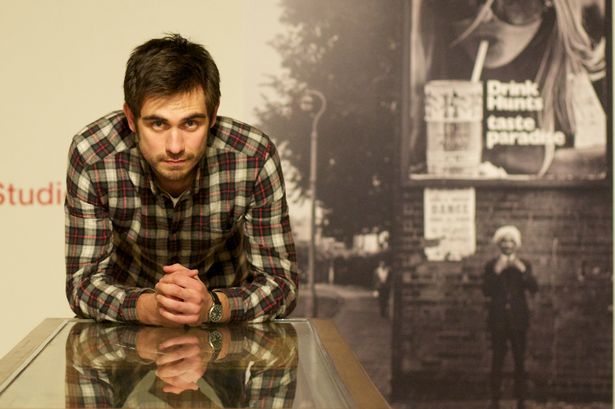 Kieran Connell is Lecturer in Contemporary British History at Queen’s University Belfast. He is a Fulbright Scholar and the co-editor of Cultural Studies 50 Years On. His first monograph, Black Handsworth: race in 1980s Britain, was published by the University of California Press in February 2019.
Time: Monday 11th of November 2019, 12.30 – 13.30
Place: Bergen Global CMI/UiB, Jekteviksbakken 31